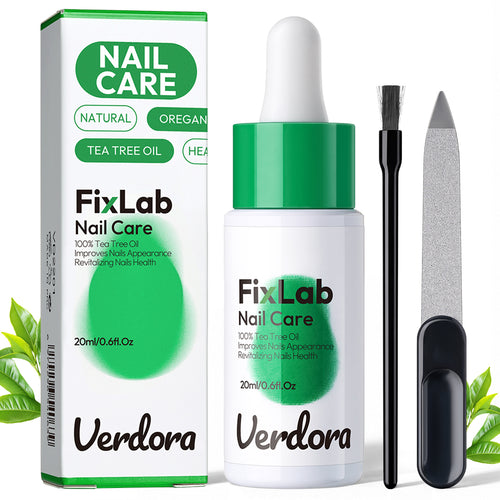
Is Toenail Fungus Liquid Right for Me? How to Choose, Use, and Know What to Expect
If you are looking for a simple at-home option for a discolored or changing toenail, a toenail-specific liquid can be a practical choice—especially for mild, localized nail concerns. The key is choosing a product designed for the nail, using it consistently, and understanding that toenails grow slowly.
Before buying a toenail liquid, most people want to know three things:
- Is liquid better than a patch or regular antifungal cream?
- Is it appropriate for my toenail?
- How should I use it, and how long should I expect to use it?
This guide answers those questions so you can decide whether a toenail liquid fits your routine.
Toenail Liquid vs. Other Treatment Options
- Is a Toenail Fungus Liquid Better Than a Toenail Patch?
A liquid is the more direct option for applying a topical product to the nail, while a patch is the more convenient option for coverage.
A liquid is applied directly to the nail, whereas a patch provides a physical covering after application.
The practical difference is the routine:
Liquid: apply directly → allow to dry → continue with your day or night.
Patch: apply according to directions → leave in place for the recommended period.
Best choice: Choose Verdora liquid if direct topical application is your priority. Add the patch if you prefer an overnight coverage routine.
- Is a Toenail Liquid Better Than Regular Antifungal Cream?
A toenail-specific liquid is a more appropriate format for nail care than a regular antifungal cream designed for skin.
This distinction is important because not all antifungal products are designed for the same area.
The American Academy of Dermatology notes that OTC terbinafine cream can treat fungal infections of the skin, but it does not adequately penetrate the nail to treat fungal nail infections.
So comparing a skin cream with a nail-specific liquid is not really an apples-to-apples comparison.
Skin antifungal cream → designed primarily for skin
Toenail liquid → designed for topical nail care
Best choice: If your concern is specifically the toenail, choose a product intended for the nail rather than simply using a skin antifungal cream.
- Should You Use Toenail Liquid Alone or With a Patch?
If you want a more complete Verdora routine, using the liquid together with the patch is the more comprehensive option.
The two products serve different practical purposes:
Using only the liquid means fewer steps. Using liquid + patch adds another step but can make a structured nighttime routine easier to follow.
This is not about claiming that two products automatically provide “double” results. It is about creating a more complete routine.
Best choice: Choose Verdora liquid alone if you want fewer steps. Choose the liquid + patch bundle if you want a more structured overnight routine.
Is Toenail Liquid Suitable for Your Toenail?
- Is Liquid Better for a Thick, Yellow Toenail Than a Patch?
A liquid gives you more direct access to the nail surface.
Thickening and yellow discoloration can occur with fungal nail infections, but other nail conditions can look similar.
For certain prescription topical nail treatments, dermatologists may file or trim the nail to help medication penetrate more effectively.
The important distinction is severity:
Mild discoloration → easier to monitor as part of an at-home routine.
Severe thickening, crumbling, or lifting → more reason to identify the underlying cause first.
Best choice: For mild nail changes, a topical liquid may be a practical option. For severe thickening or significant nail damage.
- Can You Use Toenail Liquid If Only One Toenail Is Discolored?
Yes—if only one nail is affected, focusing your routine on that nail is more practical than automatically treating every toenail.
One discolored nail does not mean all of your nails need to be treated.
However, if the condition begins appearing on several nails, the situation is different. Multiple affected nails may warrant professional evaluation.
Best choice: One affected nail → focus your routine there. Several nails changing → consider professional evaluation before expanding your routine.
- Should You Use Toenail Liquid If Your Nail Is Thick, Brittle, or Starting to Lift?
Mild thickening or brittleness may be appropriate for an at-home nail-care routine, but significant nail lifting should be evaluated before relying on topical care alone.
Fungal nail infections can cause thick, brittle, crumbly, or separated nails. But trauma and other nail conditions can produce similar changes.
The more the nail has separated from the nail bed, the more important it becomes to understand why.
Best choice: Mild changes → follow the product directions. Significant lifting, pain, swelling, or drainage → seek professional advice first.
- Can Toenail Liquid Penetrate a Thick Nail, or Should You File It First?
The AAD notes that dermatologists may file the nail surface to improve penetration of certain prescription topical treatments.
A thick nail can make it harder for a topical liquid to reach the nail surface. Dermatologists may gently file or thin the nail to help certain prescription topical treatments penetrate more effectively.
At home, avoid aggressive filing just to make a product “work better.” Over-filing can create heat and friction, leaving the nail or surrounding skin sore, sensitive, or painful.
How Should You Use Toenail Liquid?
- Should You Apply Toenail Liquid Before or After a Shower?
Apply toenail liquid after your shower, when the nail is completely dry.
Water and moisture can interfere with application. The AAD recommends waiting after washing or showering before applying certain topical nail medicines.
The simplest routine is:
Shower → dry your feet → let the nail dry completely → apply the liquid.
Applying immediately after a shower saves a few minutes, but applying to a fully dry nail gives you a better surface.
Best choice: Always make clean, completely dry nails the starting point of your routine.
- Can You Put Socks and Shoes on Right After Applying Toenail Liquid?
It is better to let the liquid dry before putting on socks or shoes.
Immediately covering the nail can cause friction and transfer some product to your sock. Closed shoes can also create a warm, humid environment around the feet.
NHS guidance recommends keeping feet dry and changing socks regularly as part of fungal nail prevention and care.
Best choice: Apply the liquid when you have enough time for it to dry—ideally as part of your nighttime routine.
- Is It Better to Apply Toenail Liquid in the Morning or Before Bed?
Before bed is usually the more convenient choice because there is less friction, walking, and shoe pressure.
Compare the two routines:
Morning: apply → wait to dry → socks → shoes → walking → sweating.
Night: apply → allow to dry → sleep → minimal friction.
Nighttime does not automatically make a product medically stronger. Its main advantage is convenience and consistency.
Best choice: If you have trouble maintaining a daily routine, choose bedtime and make it part of your regular nighttime self-care.
- Can You Use Toenail Liquid Every Day?
Use it according to the directions for your specific product rather than assuming that more frequent application is always better.
Different nail treatments have different schedules. Some prescription topical treatments are applied daily, while others are applied less frequently. For example, certain prescription topical nail medicines require daily use for up to 48 weeks.
The important factor is consistency with the intended schedule.
Best choice: Follow the Verdora label exactly. Do not increase or reduce the frequency simply because you think more product will produce faster results.
- How Long Should You Let Toenail Liquid Dry Before Putting on Socks?
Let the product dry according to its specific instructions before covering the nail.
There is no universal drying time for every toenail liquid because formulas differ.
The practical comparison is:
Apply and immediately cover → more chance of transfer and friction.
Apply and allow to dry → cleaner, more consistent routine.
Best choice: Apply Verdora when you have enough time to let it dry before socks or shoes, which is another reason bedtime can be convenient.

Toenail Liquid in Everyday Situations
- Can You Use Toenail Liquid If You Have Sweaty Feet or Athlete's Foot?
Yes, but treat the nail and the surrounding skin as separate concerns.
Athlete's foot affects the skin, while a toenail product is intended for the nail. The two conditions can occur together, and moisture can contribute to fungal problems.
NHS recommends keeping feet dry, changing socks regularly, and treating athlete's foot when present.
Best choice: Continue your nail-care routine for the nail while separately addressing athlete's foot and keeping your feet dry.
- Can You Wear Toenail Polish While Using a Toenail Liquid?
If your priority is nail care and monitoring progress, keeping the affected nail free of polish is the simpler option.
Nail polish can cover discoloration cosmetically, but it does not address the underlying problem. It can also make it harder to monitor changes in the nail and may interfere with some topical products.
The choice is therefore:
Polish → better cosmetic appearance.
Bare nail → easier application and monitoring.
Best choice: Prioritize an uncovered nail while actively following a nail-care routine unless your healthcare professional or product directions say otherwise.
How Long Should You Use Toenail Liquid?
- How Long Does Toenail Liquid Take to Show Visible Results?
Think in months, not days or one to two weeks.
Toenails grow slowly, so the damaged part of an existing nail does not suddenly disappear when you begin a routine.
NHS notes that some topical antifungal nail medicines may need 6–12 months of use. The AAD also notes that a big toenail may take a year or longer to completely grow out.
This creates an important distinction:
Treatment/care begins → new nail grows → damaged nail gradually grows out.
Best choice: Do not judge your routine after a few days. Monitor new growth from the base of the nail and stay consistent with the product directions.
- How Long Should You Use Toenail Liquid Before Switching?
Do not switch products simply because the existing nail still looks damaged after a few weeks.
The existing damaged nail needs time to grow out. Some topical nail treatments require several months of regular use; NHS lists 6–12 months for certain pharmacy nail treatments.
However, persistent worsening, spreading to other nails, pain, or significant nail damage is different from simply waiting for nail growth.
Best choice: Stay consistent when the nail is stable and improving. If it worsens, spreads, or does not improve over an appropriate period, seek professional advice instead of repeatedly switching products.
When Should You Choose a Different Treatment?
- Is Toenail Liquid Worth Trying Before Prescription Antifungal Pills?
A topical routine can be an option for people who prefer a non-oral approach, but it should not be presented as a replacement for prescription oral treatment when oral treatment is medically appropriate.
Oral treatment also has medical considerations, including potential side effects and drug interactions.
Best choice: If you prefer a non-oral approach and your nail changes are mild, a topical routine may be worth considering. For confirmed, extensive, or persistent infections, discuss prescription options with a healthcare professional.
- If OTC Antifungal Cream Didn't Work, Is a Toenail Liquid Worth Trying?
Yes, if the cream you previously used was designed for skin rather than nails, its failure does not necessarily mean a nail-specific product is unsuitable.
This is an important distinction.
A regular OTC antifungal cream may work for athlete's foot or other skin infections, but the AAD notes that OTC terbinafine cream does not adequately penetrate the nail to treat fungal nail infection.
So:
Skin antifungal cream failure ≠ proof that every nail treatment will fail.
Nail-specific treatment → designed for a different application area.
Best choice: If you previously used a skin cream, reassess whether it was actually intended for nail treatment. If you have already tried appropriate nail treatments without improvement, seek professional advice.
- Is Toenail Liquid Better for Mild or Severe Nail Fungus?
A topical nail-care routine is generally more appropriate for mild, localized nail changes than for severe or extensive nail involvement.
The treatment choice can change as severity increases.
For certain pharmacy topical treatments, NHS describes courses lasting 6–12 months. More severe or unsuccessful cases may require medical evaluation and potentially prescription treatment.
The AAD also distinguishes between topical and oral treatment based partly on the extent and severity of nail involvement.
Best choice: Mild, localized changes → consider a topical routine. Severe thickening, extensive involvement, significant lifting, or repeated treatment failure → seek professional evaluation.
Should You Buy Verdora Liquid Alone or the Liquid + Patch Bundle?
Choose Verdora liquid alone if you want direct topical nail care with fewer steps; choose the liquid + patch bundle if you want a more structured routine that combines direct application with convenient coverage.
The decision comes down to how you prefer to use the product:
- You prefer a simple routine.
- You already have a patch.
- You want direct topical application.
- You do not want an additional step.
Choose the liquid + patch bundle if:
- You are starting a new routine.
- You want direct application plus coverage.
- You prefer an overnight routine.
- You want both products in one purchase.
The bundle should not be described as automatically providing “double” medical results. Its advantage is having two complementary components in one routine.
Best choice: For a simple topical routine, choose Verdora Toenail Liquid. For a more complete at-home routine, choose the Verdora Liquid + Patch Bundle.

FAQ: Toenail Fungus Liquid
How often should I use Verdora toenail liquid?
Follow the instructions on your specific Verdora product. Do not apply it more frequently than recommended in an attempt to accelerate results.
Should I apply toenail liquid every night?
If your product directions call for daily use, nighttime is a convenient time to build the habit. The important factor is following the recommended schedule consistently.
Can I use toenail liquid on all my toenails?
Focus on affected nails rather than automatically applying it to healthy nails. If several nails are changing, consider professional evaluation.
Can I use toenail liquid with a toenail patch?
Yes, if the product directions support using both. The liquid provides direct application, while the patch provides a convenient coverage step.
Can I use toenail liquid after a shower?
Yes. Clean the nail and let it become completely dry before application.
Can I wear socks after applying toenail liquid?
Yes, after the product has dried according to its instructions. Applying it before bed can make this easier.
Can toenail liquid make my nail look normal in a few days?
No. Toenails grow slowly, so visible changes generally take much longer than a few days. Some topical nail treatments require months of consistent use.
How long does a big toenail take to grow out?
A big toenail can take a year or longer to completely grow out, according to the AAD.
What should I look for when tracking progress?
Look at new growth from the base of the nail rather than expecting the existing damaged portion to immediately change.
When should I stop using an at-home toenail product and see a doctor?
Consider professional evaluation if the nail is severely thickened, significantly lifted, painful, swollen, draining, rapidly changing, or if several nails are affected. You should also seek advice if you are unsure whether the nail changes are actually caused by fungus.
What is the simplest Verdora routine?
Clean → dry completely → apply Verdora liquid according to the directions → allow it to dry → follow your normal nighttime routine.
If you choose the liquid + patch bundle:
Clean → dry → apply liquid → allow it to dry as directed → apply patch → repeat consistently.
The goal is not a complicated routine. The goal is a routine you can realistically maintain over time.